Poverty and Academic Medicine

Disadvantaged, Med Students & Healthcare Professionals

Students in medical school and other health professions programs are not typically seen as vulnerable, but as schools increasingly recruit disadvantaged students, it is not uncommon for students to lack the resources to meet their own basic needs and those of their families.

Request for additions to resource bundles

If you’re viewing this page as a non-member of the AAMC Communities, consider registering and joining the conversation!  


Poverty & Academic Medicine Resources 

The AAMC promotes a culture of teaching and learning where individuals acknowledge and identify strategies to address racism in medicine and the broader community. Below are faculty resources to support anti-racist curriculum design and teaching practices in medical education. 

Poor and In Poor Health

In the United States, discussion about how to improve health often turns to either access to care or health behaviors like smoking or diet. These things matter, but there are also many social and economic factors that compromise health and impair the ability to make healthful choices in the first place that should be considered.

Download Fact Sheet

AAMC Center For Health Justice

The AAMC Center For Health Justice sparks community-centered, multisector research, collaboration, and action to make the case for policies and practices that ensure all communities have an equal opportunity to thrive.

Engage the Health Justice Community

  • Continue our work alongside AAMC CHARGE (the Collaborative for Health Equity: Act, Research, Generate Evidence), an interprofessional and cross-disciplinary group of health equity scholars and champions from across the United States.
  • Collaborate with the Multisector Partner Group, where national leaders, local leaders from community-based organizations, and community organizers from 10 sectors representing the diverse social and political determinants of health convene to determine the center’s priorities and strategy.
  • Convene experts, policymakers, and community members to examine health inequities data and act together to address these inequities. 
  • Respond to requests for stakeholder engagement and provide important insight to federal agencies that work toward and fund health equity. 

Build Evidence and Share Expertise

  • Conduct nationally representative opinion polling to learn how the public feels about health equity and justice.
  • Produce original research and analysis to build support for policy and practice changes that have a systemic impact. 
  • Provide funding for on-the-ground partnerships, evidence-building, and implementation of interventions for health equity.

Ease the Path to Health Equity

  • Equip organizations both inside and outside of health care with the tools they need to become trustworthy partners to their communities.
  • Guide institutions toward a deeper understanding of equity-focused, person-first language and narratives and why these choices matter. 
  • Develop tools to help institutions and community organizations communicate with each other about their health equity work and form sustainable, effective, co-equal partnerships.

Community Engagement and Collaboration

The AAMC has curated this collection of resources describing why community engagement is necessary for promoting health equity. This section will be regularly updated with the latest resources, articles, and toolkits created and offered by the AAMC and others.

Here are a few resources that present arguments for the importance of community engagement to advance health equity and improve population health. 

Interested in starting a community?

Contact Penny Schnarrs to get started!

AAMC Featured Story

Born with a physical handicap and growing up in poverty, Dr. Luviano overcame many obstacles to join the U.S. Army and then become an ophthalmologist.
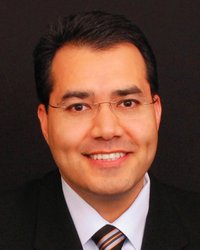
Undergraduate: University of Texas at Austin, 1997
Major: Biology
Medical school: University of Texas Southwestern Medical School, 2003
Residency:  Los Angeles County Martin Luther King, Jr/Drew Medical School
Specialty: Ophthalmology

As a child, what did you want to be when you grew up?

I knew I wanted to be a doctor from the time I was 9 years old because of a dreadful accident in my family. When I was old enough, I enrolled in the Dr. Michael Debakey High School for Health Professions. I wanted to attend this high school so much that I went to the interview alone when my parents were not able not take me. As young as I was, I took two city buses and got lost along the journey. But nothing could have stopped me from taking this first step.

Who or what inspired you?

The physicians and surgeons who treated my family member during a critical time after an accident spent a great deal of time with me, and they even let me follow them around the hospital for hours. Seeing my interest in all things medical, they encouraged me to become a doctor. I admired them tremendously, and I wanted to be like them. In high school we were allowed to work in hospitals and clinics, and these experiences confirmed my career choice.

Read the full story here

Learn Serve Lead 2023: Poverty – Leaving No Patients Behind

We can solve poverty in America. We just don’t want to.

Sociologist and Pulitzer Prize-winning author Matthew Desmond, PhD, says we must divest from the policies that exploit the poor to the benefit of the affluent. Full Story

The United States, the richest country on earth, has more poverty than any other advanced democracy. Why?

Get the book

Check out these resources next.

  • #Poverty #NotABookClub #resources #Poverty

  • Rethinking Rural Health Issue Brief

    Library Entry

    #Poverty